
The Eastern Naturalist
Issue #2, September 2023

Welcome to the second edition of The Eastern Naturalist, we are getting bigger and better already! This week, I am writing to you from beyond the civilised world. I am camped somewhere in the Snowy River wilderness working on another project, but nonetheless have scoured my new dedicated inbox for natural history news stories from around Eastern Australia, and report on a fascinating collection of research. Last week was Threatened species day (7th of September), the day the last known thylacine died at Hobart Zoo, so it is apt that we cover the recent discovery of the lost remains of that animal. We also look at nesting behaviour in tiny eastern pygmy possums and bandicoots, and potentially shed light on the ancient ancestor of Australia’s megadiverse diprotodontian marsupials. Happy reading! And don’t forget to subscribe for weekly natural history news in your inbox!

Famous photo not the last captive Thylacine, remains finally found
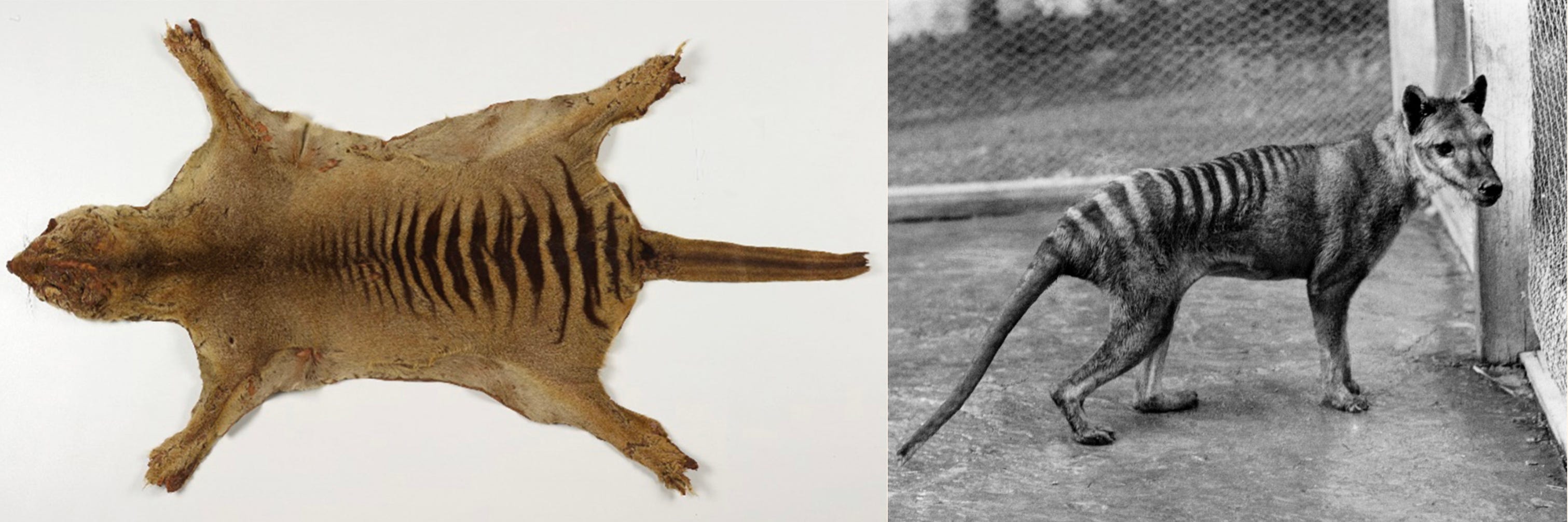
Sometimes, a good story is too good… the last known thylacine died at Hobart Zoo on 7th of September, 1936, but luckily, just a few months prior its photo was captured, to hold up as a symbol for future generations. The thylacine in the above right photo even had a name in popular culture — ‘Benjamin’ — and has been a part of countless stories in publications and websites all around the world. But the story of Benjamin has recently been debunked, the name was conjured up by a charlatan back in the mid-1900s, and it was also realised that the photo was actually of a female, making the name somewhat inappropriate. Lacking a photo of the ‘Endling’ (the last individual of a species’ kind), we would hope we might at least possess the remains to remember it by. Yet researchers have never been able to track these down either, even though they were recorded as being sent to the Tasmanian Museum. It seems then that despite the recent extinction of the species and the amount of scientific enterprise around during its time, we are left with nothing but untenable stories, sad for such a charismatic and iconic animal.

In a recent and meticulous investigation, well-known thylacine expert Robert Paddle and Tasmanian Museum curator Kathryn Medlock, have not only finally found the remains of the very last thylacine from Hobart Zoo, but also reveal that the famous photograph is actually of the second-last thylacine at the Zoo. The photo was taken by a man named Benjamin Shepherd and purchased by local naturalist Norman Laird, who was then informed by Shepherd that the thylacine in the photo was not only a bad representation of the species due to the animal’s poor physical condition, but also that “The animal died the day after it was photographed.” This puts the death of that animal sometime between the 12th and 19th of May, several months before the death of the actual last thylacine at the Zoo on September 7th.
Paddle and Medlock reveal that another thylacine then arrived on the 20th of May, 1936. This individual was an elderly female, and had come in on-the-sly as it was likely trapped illegally, hence there was a lack of publicity about its provenance. By this time, changes in the ownership of the Zoo had resulted in serious shortcomings in its management. Arthur Reid was the original curator and had run the Zoo well with his daughter Alison, but he died from complications arising from an eye injury he received while defending the Zoo from a would-be parrot thief. His daughter then took over from him for a while and continued to tend to the animals competently and compassionately. But in the midst of an economic depression, Bruce Lipscombe, superintendent of the Reserves Committee, decided to take over administration and gradually ousted Alison. Lipscombe cut down costs, retaining only one full-time keeper for the placental carnivores (not thylacines), and used unpaid social workers in the majority of the remaining positions. Alison was genuinely concerned about the animal’s welfare, but stripped of any authority was reduced to making complaints, and in an act of retaliation Lipscombe virtually ostracised her completely. The absence of Alison not only led to the death of the second-last thylacine through neglect (whose remains were thrown on the daily refuse pile), but also to the death of the very last thylacine within just four months of its arrival, on September 7th. Fortunately, Alison’s doggedness at least paid off in one way when Lipscombe agreed that sending the remains of deceased animals to the Tasmanian Museum was a probably a good practise for scientific institutions.
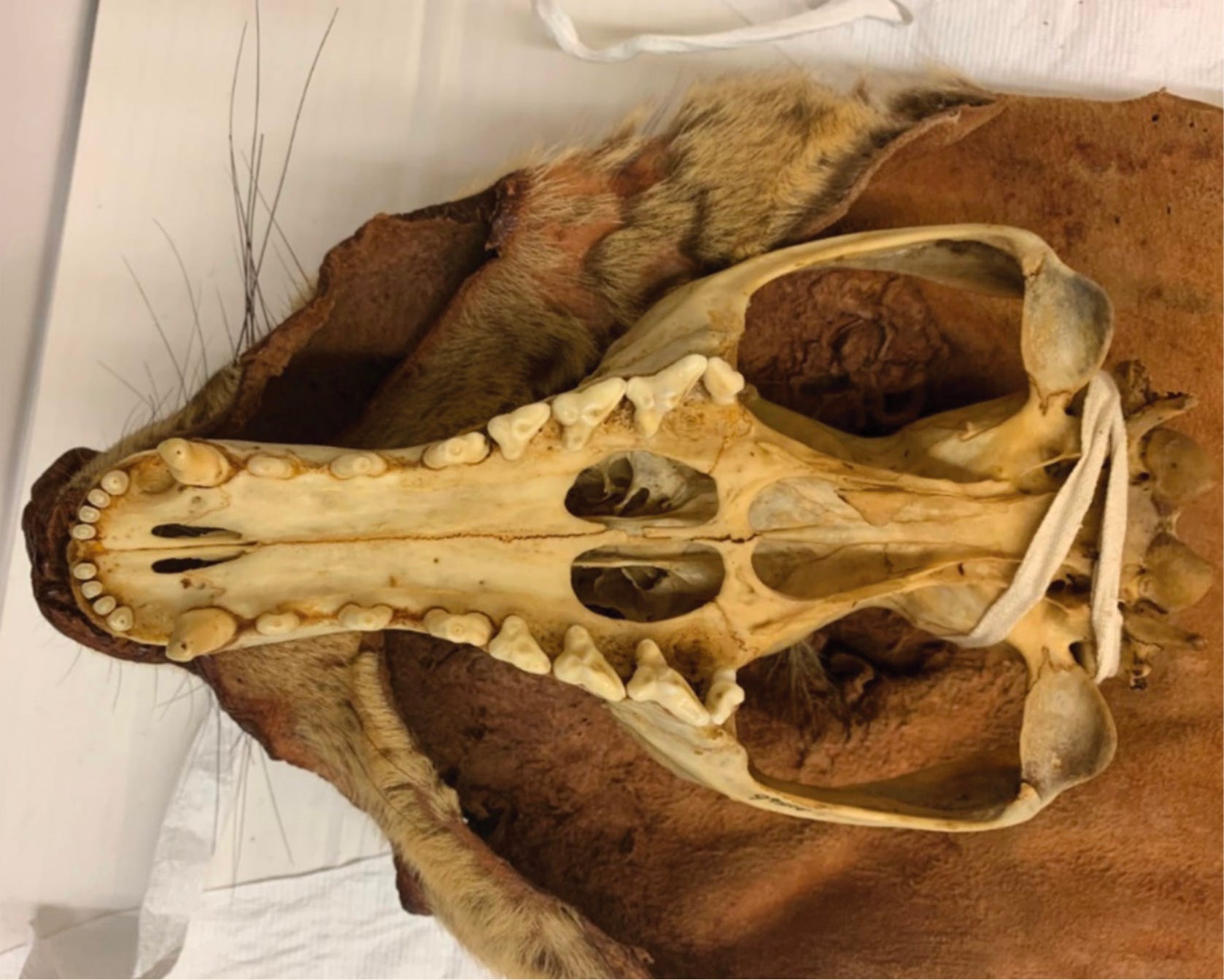
For the last several decades a hunt for those remains has ensued at the Tasmanian Museum. Paddle and Medlock were able to verify the provenance of eleven out of twelve of the Museum’s thylacine skins, and seven of its eight skeletons. The single remaining skeleton (skeleton A1546) and skin (skin A1283) had clearly been processed by a professional, and they fit perfectly together. They were identified as an old female with worn teeth, and could only belong to the last thylacine from Hobart Zoo. Eventually, Paddle and Medlock discovered the reasons for its ‘disappearance’. The remains were considered to not add anything new to the Museum’s thylacine collection, and so were set aside for its education program. The remains spent several decades touring schools and being shown at in-house Museum education seminars, before being left in a closet for another several decades. Now discovered, at least we have something to remember perhaps the most famous and important Endling in all of human history.
See the original research.
Female eastern pygmy-possums dominate home choice in Sydney woodlands
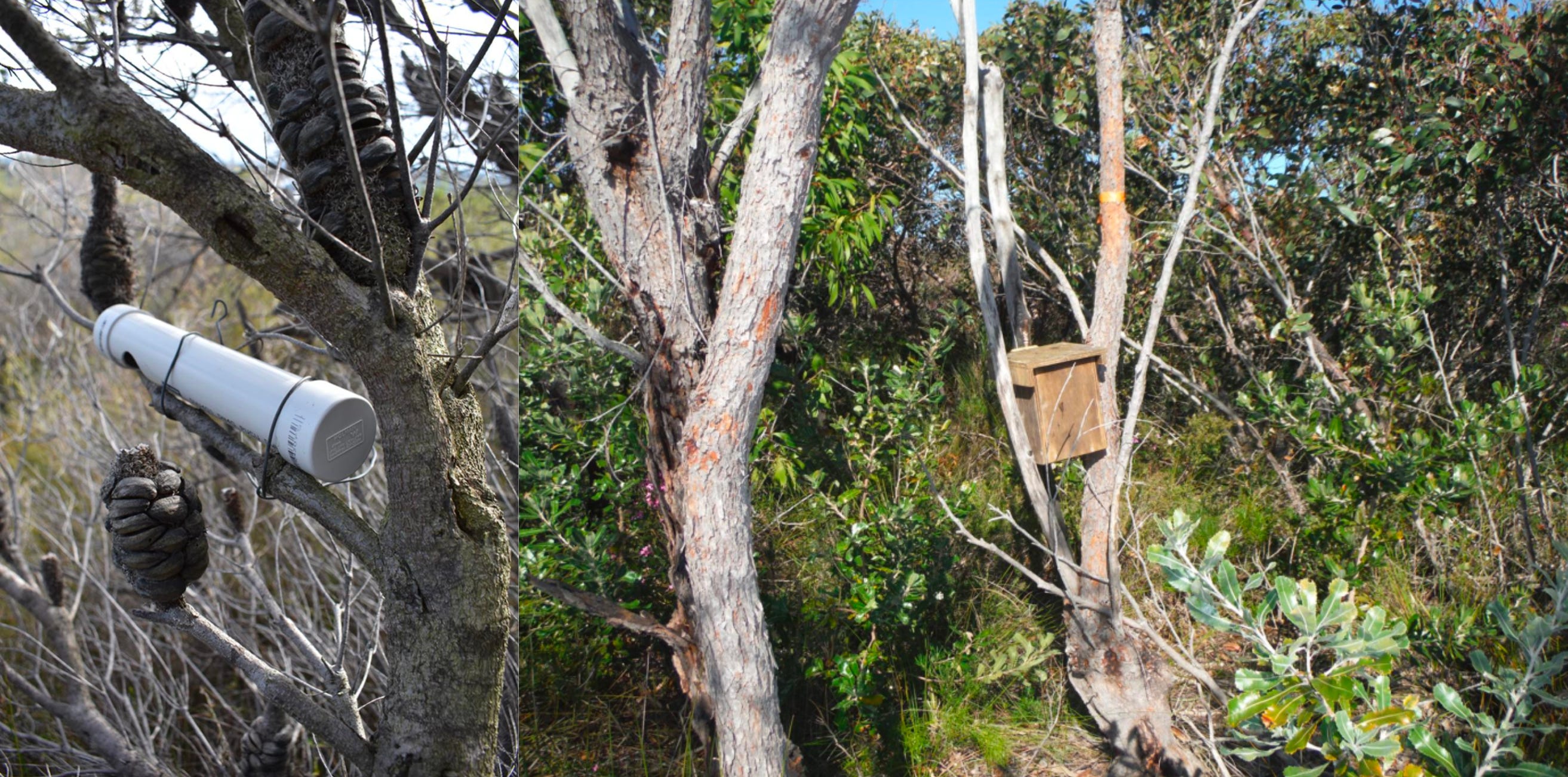
Pygmy-possums are up there with the cutest marsupials ever, and a new paper in Australian Mammalogy has revealed some interesting quirks of their lifestyles. Ross Goldingay, an Associate Professor at Southern Cross University, has been busy over the last several years checking around ninety-six artificial tiny homes setup across two sites in Royal National Park, just 22 km from the Sydney CBD. His main aim was to determine whether eastern pygmy-possums (Cercartetus nanus) prefer the tree-change or sea-change lifestyle, an understanding which would help guide controlled burns and other human activities in potential pygmy-possum habitat.
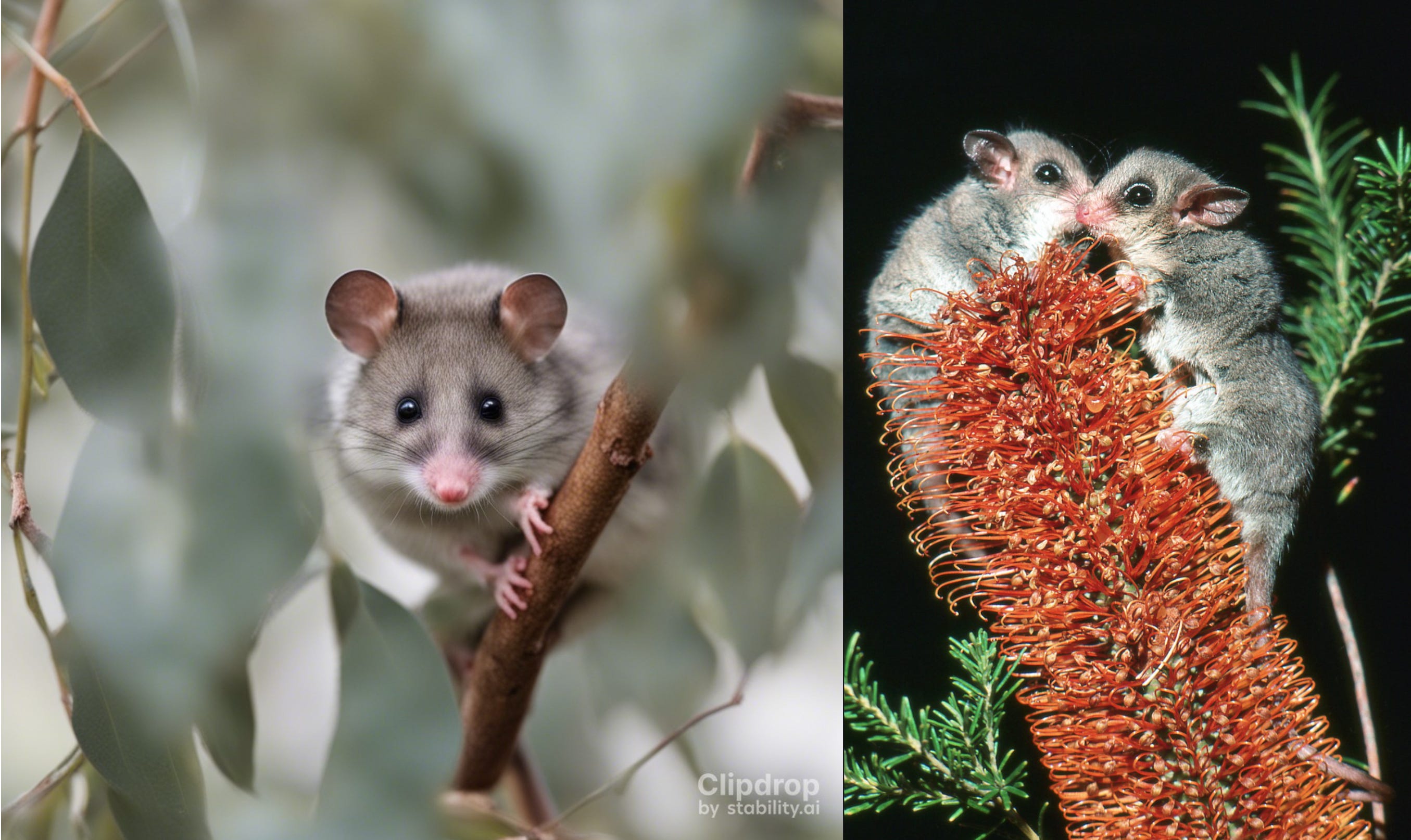
A 9 Ha plot in woodland, filled with 48 evenly spaced tiny shelters was used to represent the tree-change lifestyle, and a sister suburb was setup nearby in heathlands (presumably with ocean views) to cater for those preferring the sea-change. To assess the preference, Assoc. Prof. Goldingay regularly checked the occupancy rate of pygmy-possums of either sex and various ages in the tiny homes over four years. Not surprisingly, it was found that females of this arboreal marsupial preferred the tree-change twice-as-much, however somewhat more confusingly it was found that adult males weren’t bothered whether they lived amongst trees or mere shrubs. Goldingay suggests a likely explanation for the disparity between the two sexes is that the woodlands offer more safety for females with young. Woodlands offer protection from wind, rain and cold temperatures, and may also offer enhanced safety from predators. One can imagine that hiding among the shrubs would leave a defenceless pygmy-possum vulnerable to owls (and other birds of prey), quolls, and cats pretty much 24/7, whereas a good hollow with a small enough opening will keep anything larger than a small rat at bay.
Personally, I also wonder whether woodlands offer a more protein-rich smorgasbord of snacks to aid in the development of possum-babies (e.g., spiders and beetles), and may even offer a safer ‘network’ of other hollows, crevices, and pathways through the canopy for young possums once they are old enough to leave the nest. Evolution, afterall, favours not only successful breeding but also favours mothers — and sometimes fathers and grandparents — who look after their young in such a way that will ensure the young’s own flourishing into adulthood. As far as the males go, well, eastern pygmy-possums are known to travel hundreds of metres in a night, use birds nests and leaf-skirts (small, tight whorls of leaves) for sleeping, and what is more, typically only spend a few nights at a time in their chosen nests. Females with young on the other hand are known to spend at least twenty days in the same hollow.
The interesting results don’t stop there. Adult males were mysteriously uncommon during winter, whereas the adult females seemed to have taken over both suburbs. leading Goldingay to suggest that females with young are aggressively excluding males from the areas harbouring the best hollows (in the case of this research, the artificial tiny homes). In eastern pygmy-possums, females outweigh males by a whopping 5 g on average (a little heavier than a teaspoon of sugar, with total weights being around 27 g versus around 22 g), meaning they may be using brute force to evict the males from their houses. However, the males probably have their own spaces to retreat to, as they have home ranges which are up to 35% larger than those of females (proportionally about the size of a garage or decent-sized garden shed), and are likely managing to find natural shelters around the study sites. Lastly, throughout the study period it was found that life goes on, with spring and summer leading to detection rates for the breeding females going down (likely exhausted from a breeding season where they can raise 2-3 litters), and the newly independent sub-adults being discovered more frequently in the tiny homes as they disperse outwards and begin the great journey of living out their own lives. Overall, one of the most astounding results that I feel came from the research was the sheer number of eastern pygmy-possums inhabiting this small area, with 51 breeding females, 61 adult males, and 48 subadults collected (and returned) over the four years of the study. I never knew we might literally be surrounded by them!
See the original research.
25 million-year-old fossil 'koala’ could help explain the origin of all diprotodonts
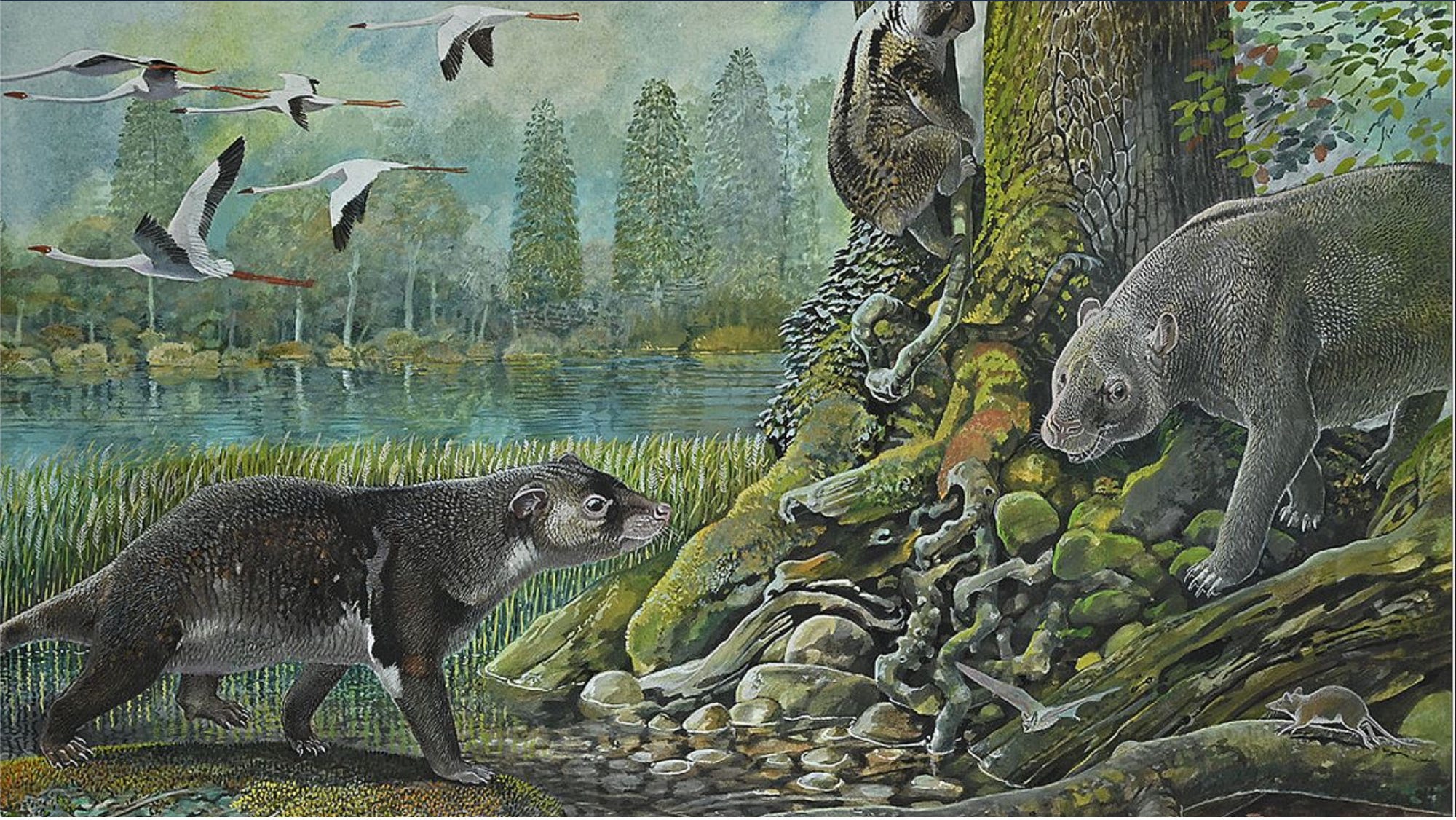
The diprodotonts are a megadiverse family of Australian marsupials. In fact, they make up the more than half of all Australian marsupial species, incorporating the koala, the wombats, about 60 species of possums and gliders (‘phalangers’), and about 60 species kangaroos, wallabies, potoroos and bettongs (‘macropods’). That’s over 120 species in total. In contrast, there are only around 90 non-diprotodont marsupial species in Australia, made up of about about 60 species of the ‘dasyurids’ (quolls, antechinuses, the Tasmanian devil, etc.), about 20 species of bandicoots and bilbies, and two species of the extremely weird marsupial moles. But what gave rise to this great variety of animals which now cover virtually every inch of Australia, from burrowing beneath the red desert sands to hopping across treeless plains, and lazing about the tallest eucalypts in the mountains? The age and origin of this quintessentially Australian group has been agonisingly difficult for palaeontologists to piece together since Western science arrived on our shores over 200 years ago. Now, the discovery of a new ‘koala’ fossil in the Northern Territory may be one of the first steps in resolving this puzzle.
The new fossil was discovered by PhD student Arthur Crighton — from Flinders University in South Australia — at the Pwerte Marnte Marnte fossil site near Alice Springs. It has been dated to around 25 million years old, which in itself was no cause for excitement as that makes it as old as the other oldest diprotodont fossils already discovered on the continent. For years researchers have been hoping to discover diprotodont fossils up to 50—65 million years old, as molecular evidence and the sheer size of the group suggests diprotodonts split off from other marsupials that long ago. Whilst the new koala fossil — named Lumakoala blackae — is nowhere near that age, the research team discovered that its molars share important features with the molars of two fossil marsupials from 50 — 65 million years ago, named Thylacotinga and Chulpasia. Previously, it was assumed that these two ancient marsupials were more similar to South American marsupials, but with the newfound similarities, Crighton and his co-researchers are suggesting that Thylacotinga and Chulpasia are possibly the first ancestors to diprotodonts.
Although the conclusions are somewhat tentative due to the rather lengthy 30 million year time-gap involved, there were several other interesting findings from the research at Pwerte Marnte Marnte. The fossils of two other koala ancestors were discovered at the site — Madakoala and Nimiokoala — and along with Lumakoala there now may be up to ten genera in the family Phascolarctidae (the koala family), even though only one of those remains today, the humble koala ‘bear’, Phascolarctos cinereus.
See the original research.
Meanwhile, in other koala news…
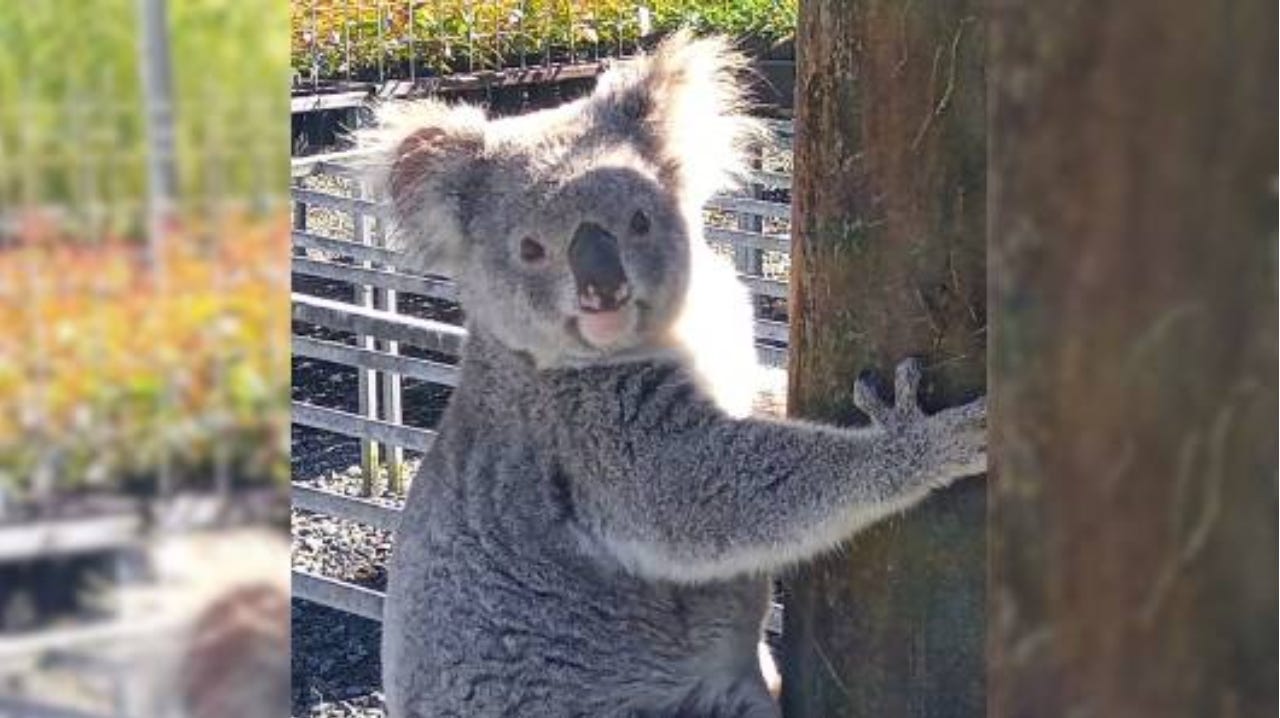
…Claude, a member of the last remaining species of the ‘koala’ family, Phascolarctos cinereus, has been found seemingly ripping-off his own kind by eating thousands of dollars worth of seedlings before they could be planted as food trees for the benefit of the whole species. The crime happened at the Eastern Forest Nursery near Lismore, NSW, which specialises in growing seedlings for conservation projects. After a couple of months of assuming possums, nursery owner Humphrey Herington finally found Claude in a food coma near the seedlings, unable to flee the scene. "Claude has eaten thousands of seedlings. He's tucked into every type of koala food tree we grow here. Clearly Claude thinks this is a restaurant but if that was the case his bill would be about $6000 by now," Mr Herington said. He also tried to move Claude a couple of hundred metres down the road to a neighbour’s place, but the glutton soon returned and was at at it again. Despite Claude’s apparent selfishness, Mr Herington states that after two decades of running the nursery “…this is not normal koala activity… there must be a shortage of food around here.” He has now began work on a fence, and hopes that Claude and other koalas can at least wait until the seedlings are ready to be planted as long-lived koala restaurants rather than eaten as expensive snacks.
Shorts up and down the coast
Researchers at ANU have found that southern brown bandicoots (SBBs) and southern long-nosed bandicoots (LNBs) have different nest characteristics in post-fire landscapes, possibly conferring one species with a greater advantage when habitat changes occur. The study was conducted at Boodooree National Park, near Jervis Bay, NSW, and found that SBBs built their grassy nests in much denser, darker vegetation than LNBs. This could be because SBBs did not dig their nests into the ground as much as LNBs, and therefore their nests were much taller and more obvious and needed better concealment. SBBs were also more particular in where they built their nests, whereas LNBs tended to build their nests in a variety of vegetation types. Overall, the flexibility and more cryptic nature of LNB nests probably confers them with advantages in inhabiting disturbed vegetation. One wonders whether this may explain why long-nosed bandicoots are found along the entire length of eastern Australia and in a variety of habitats and not currently listed on the EPBC Act, whereas SBBs are found only in the south-east and listed as Endangered on the EPBC Act.
For over 150 years Wallace’s Line in Indonesia has marked an imaginary western limit for the natural occurrence of ancient Australian animals (such as marsupials), and where the reign of classic ‘Old World’ animals (such as bears, cats, and rhinos) begins. Despite this early understanding, naturalists have not been able to pin down a definitive explanation for why marsupials were not able to push further north and west, and why several Asian lineages were able to push down into Australia (e.g., monitor lizards which gave us our great variety of goannas, and king fishers which gave us, amongst other things, kookaburras). Researchers at the ANU have now published a study which offers a reasonable explanation. They analysed a dataset of more than 20,000 birds, mammals, reptiles and amphibians, and surmised that Asian species were already more tolerant of heat and precipitation (having evolved in that zone) and were therefore able to take advantage of new island-stepping stones that formed in the tropical zone when the northward bound Australian continental plate eventually collided with the Asian plate. The Australian species in contrast had evolved at a time when Australia had just separated from Antarctica (between 50 - 30 million years ago) and the continent was relatively cool and dry, and were less suited to island-hopping through the tropics into Asia.
A new study in Australian Zoologist has reviewed the taxonomy of Australia’s classy black cockatoos (Calyptorhynchinae — which does not include the ‘black-looking’ palm cockatoo, it may be more closely related to white cockatoos and also occurs in New Guinea) and the results are that a few new species have been added. Black cockatoos are known for their quiet-spoken decency, at least when compared with the loud-mouthed white, and childish pink cockatoos, and there are two genera which are traditionally recognised: Calyptorhyncus, possessing red to orange tail feathers, and communicating with a softly-uttered, yet grating speech; and Zanda which possess yellow to white tail feathers and communicate using drawn-out, almost forlorn wails. Previously, Calyptorhynchus included two species; the Australia-wide red-tailed black cockatoo with five subspecies, and the mostly south-eastern glossy black cockatoo (C. lathamii which featured in last week’s Photo of the Week). Zanda was comprised of three species; the eastern Australian yellow-tailed black cockatoo (Z. funereus — which had three sub-species), and in Western Australia Baudins (Z. baudinii) and Carnaby’s (Z. latirostris) cockatoos. Thanks to the new research, which considered morphology, ecology, biology, vocalisations, and previous genetic research, among the Calyptorhynchus there are now five species of red-tailed black cockatoos (northern — C. banksii; south-eastern — C. graptogyne; forest — C. naso; Inland — C. samueli; and Western — C. escondidus), and the glossy black (C. lathami). For Zanda there are now three species of yellow-tailed (eastern — Z. funerea; Western — Z. whiteae; and Tasmanian — Z. xanthanota), and Baudins (Z. baudinii) and Carnaby’s (Z. latirostris) cockatoos. The new changes now give Australia a total of eleven species of black cockatoos over the previous five. Have fun birders, these ones should be fairly easy to check off 👍
Aussie Ark continue their great work and have released twenty long-nosed potoroos (Potorous tridactylus) into their 400 Ha feral-proof sanctuary, as well as Rocket the rock wallaby (Petrogal penicillata) into his own custom-made enclosure. Rewilding is demanding work but brings great hope for the future, allowing certain species to reclaim landscapes from which they have been so quickly erased in just the last 100 years. It gives me hope that in my own adventures across the Australian landscape I may one day encounter native species which were seen by the last several thousand generations of Australians, but which have been denied to just the last few.
The golden-tipped bat (Phoniscus papuensis) has won Cosmos Magazine’s Australian Mammal of the Year award, beating out Gilbert’s potoroo (Potorous gilbertii) and the dingo (Canis familiaris) who also made the top 3. Ten’s of thousands of votes had been submitted over the course of the competition, and Cosmos magazine, owned by the Royal Institution of Australia, says the final winner gets to the heart of the competition. Golden-tipped bats are listed as vulnerable across their range, and unheard of by most Australians. They weigh just 7 g, are about the size of an average human thumb, and their golden colouring is useful as camouflage when they sleep below the nests of birds such as yellow-throated scrubwrens and brown gerygones.
The Ecological Society of Australia has opened entries to their photography competition, with the main theme being ‘Ecology in Action’. Categories include photos of practising Ecologists in the field, Australian landscapes, wildlife, and plants. Entries close on the 1st of October, 2023.
Photo of the week
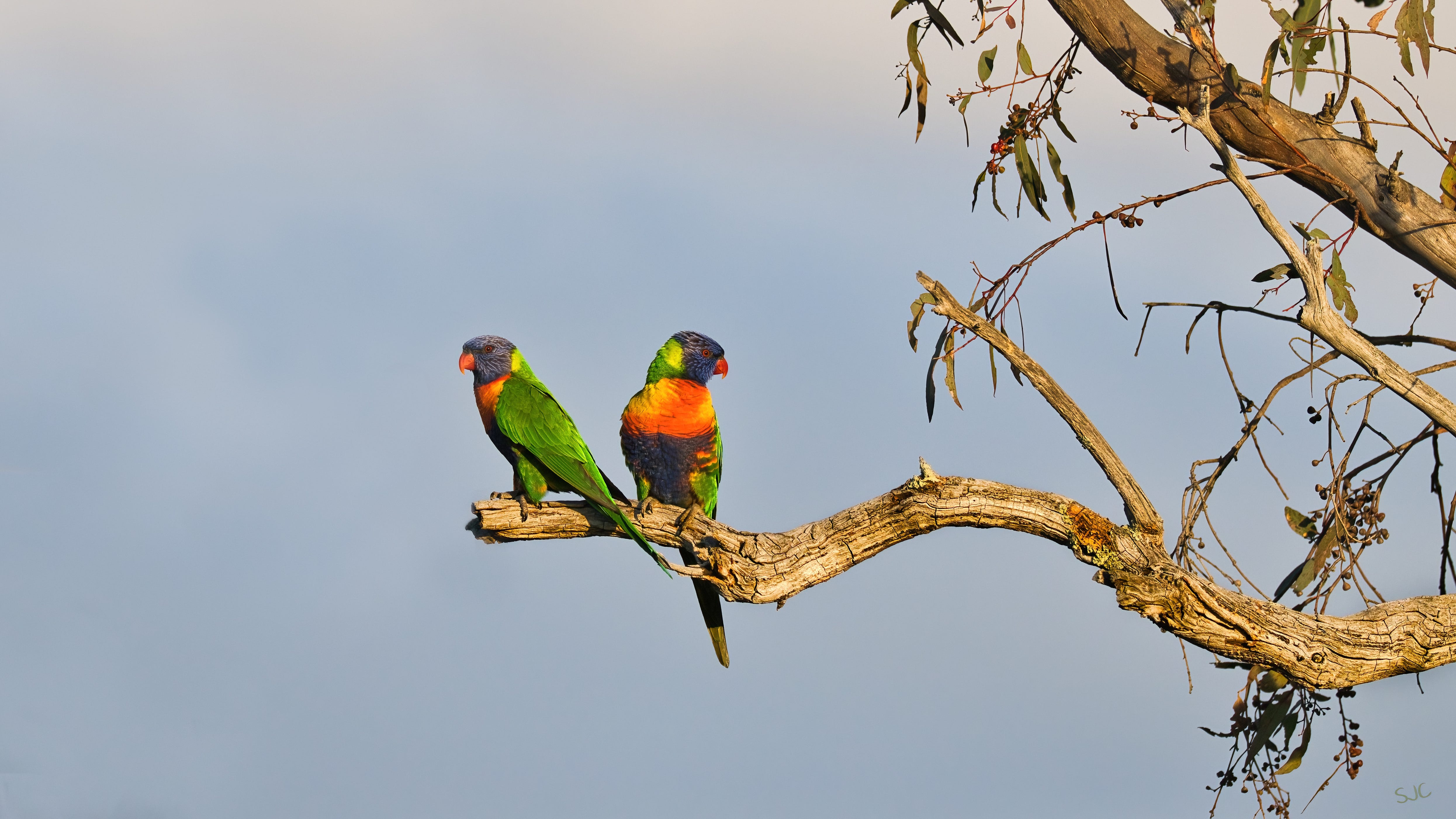
Rainbow lorikeets (Trichoglossus moluccanus) seem to be one of the species doing well with human-induced landscape changes, as they are becoming more and more common around Canberra and other towns and cities inland of their former range; I wonder if global warming may even be helping this particular species as southern-eastern Australia warms up. In my local Red Hill Nature Reserve there are plenty of tree hollows on offer for lorikeets in the ancient eucalyptus yellow box-red gum woodlands, and I merely have to follow their easily identifiable shrieks in the morning or afternoon for some decent photographic opportunities. The only issue is that they are just so damned colourful that they often look unrealistic if photographed too closely. Indeed, a close up of their indigo-blue faces reveals an almost fractal-esque pattern of feathers upon feathers, which appears to be an optical illusion which my digital camera struggles to faithfully replicate.
The spectacular colours, though challenging to photograph, are something which have always had me wondering about parrots. How does such obscene showiness evolve in the natural world? Where so many animals seem to opt for camouflage or hide in the bushes to avoid being eaten, parrots and a few other groups of birds have become outlandish in the costumes they’ve adorned over the past several million years. I came across a paper which may help to explain this via a theory called ‘mosaic evolution’. Mosaic evolution allows for the colour patches in lorikeets (of which there are dozens of species) to evolve independently and in response to different environmental or social variables. Simply put, the green backs of all lorikeet species were maintained throughout their evolutionary history for use as camouflage amongst the foliage: protection from above or behind against aerial predators such as goshawks and falcons. The gaudy colours and patches on the face and breast however were free from this selective constraint as they were not visible from above, and therefore evolved to serve as social and sexual signals within each species. The image below was taken at Red Hill, and shows the classic green wings and back of lorikeets, essentially forming a camo hoodie when they’re going about their head-bobbing and other social antics in the treetops, whereas the ‘business-end’ of their costume is about as lurid as a bird gets.
Thanks for reading Issue #2 of The Eastern Naturalist. Next week, I will likely still be out in the wild, so unfortunately, this means that Issue #3 may be a couple of weeks coming. But I will do my best (if I happen to find some internet service out there, then there is a good chance Issue #3 will arrive on time, full of another week’s worth of East Australian natural history news). In the meantime, if you haven’t subscribed, please do so below, and leave a comment on what you found most interesting in this Issue. Personally, I think the story of the discovery of the remains of the last thylacine at Hobart Zoo is a fascinating one, and I’d love to share more from what I’ve read of the full research paper, as well as Robert Paddle’s books!